
Wheelchair Ramp
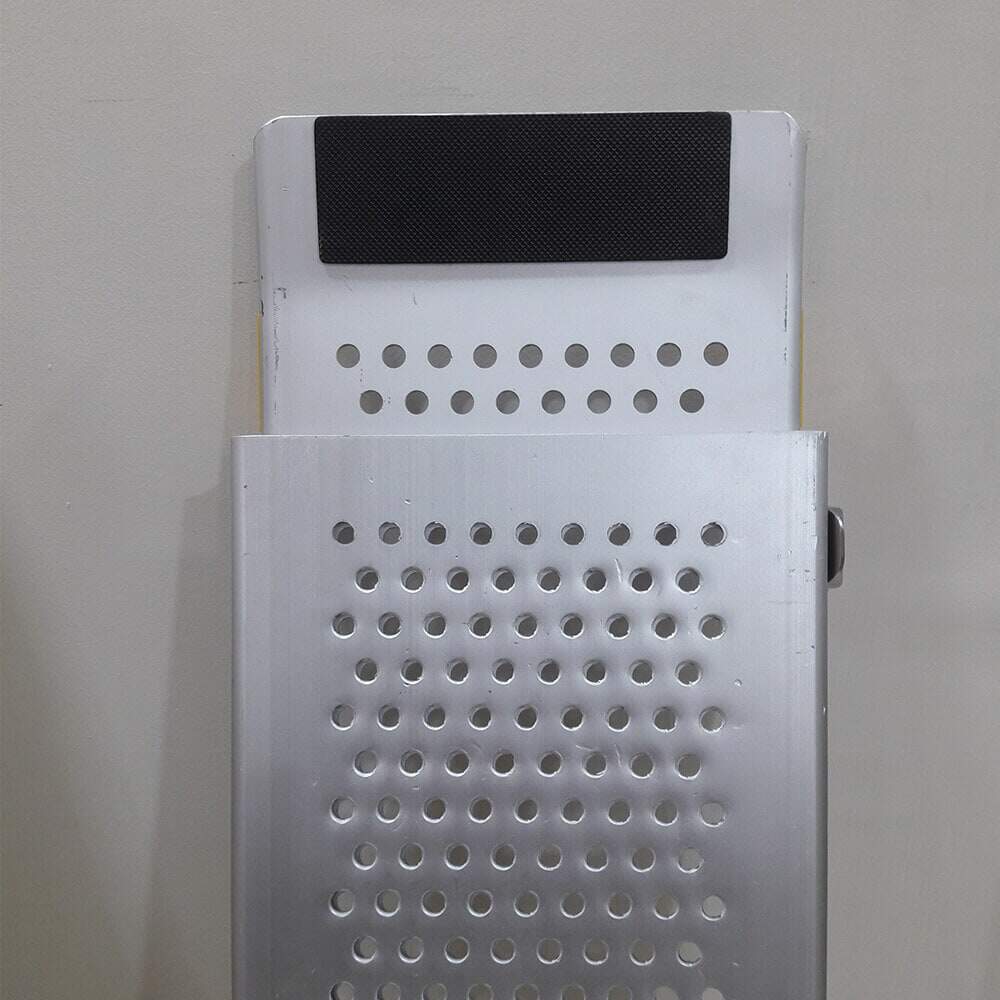
Perforation with lengthwise ribs and upstanding spikes make a unique and superb slip resistance. This ensures excellent wheel and tyre grip year-round. Weight With the new sections and perforated traction surface, we,ve been able to reduce the weight of our new wheelchair ramps by nearly 10% in comparison with earlier models. Traction surface Perforation with lengthwise ribs and upstanding spikes make a unique and superb slip resistance. This ensures excellent wheel and tyre grip year-round. Side sections Our new soft side sections have enabled us to construct a ramp with 52 mm high side edges along the entire ramp. Handles Our new handles make our ramps even easier to carry. The handles can be retracted into the side sections for easy storage and maneuvering. They can also very easily be removed or switched to the opposite side Transport locks New and improved construction. All telescopic ramps are equipped with transport locking devices that prevent the ramp components from sliding apart during transport or handling. Our Perfolight product line offers telescopic ramps, folding ramps, fixed module ramps and ramps that are both telescopic and folding. Choose the solution that is best for you
Gajanana Lift
Superior Safety & Durability: Built with anti-slip surfaces and robust, weather-resistant materials for lasting security.
Easy to Use & Install: Lightweight, portable options with simple setup for ultimate convenience.
Versatile & Customizable: Wide range of sizes and custom solutions to fit any need.
Enhanced Independence: Provides seamless accessibility, empowering users and promoting inclusivity.
Compliant & Cost-Effective: Meets accessibility standards, offering an affordable and long-term solution.
Dedicated Support: Personalized customer service for your complete satisfaction.
Gajanana Lift
Wheelchair ramps are incredibly versatile and can be used by a wide range of individuals and for various purposes beyond just wheelchairs.1 Here’s a breakdown of who can benefit:
Individuals with Mobility Challenges:
Wheelchair Users: This is the primary and most obvious group, allowing them to independently access buildings, vehicles, and elevated surfaces.
Scooter Users: Similar to wheelchairs, electric scooters can easily navigate ramps.
Individuals Using Walkers or Crutches: Ramps provide a much smoother and safer alternative to stairs, reducing the risk of falls.2
People with Temporary Injuries: Someone recovering from surgery, a broken leg, or other temporary conditions that make stairs difficult can greatly benefit.
Elderly Individuals: As mobility can decrease with age, ramps offer a gentler and safer way to move between levels, reducing strain and fall risk.
Parents with Strollers or Prams: Navigating stairs with a baby in a stroller can be challenging and unsafe; ramps provide easy access.
Delivery Personnel: For moving heavy or bulky items on dollies, hand trucks, or carts, ramps are invaluable.
For What Purposes/Equipment:
Access to Homes & Businesses: Making private residences, offices, shops, and public buildings accessible.4
Vehicle Loading: For vans, trucks, or cars to load and unload wheelchairs, scooters, or other heavy equipment.5
Moving Equipment: Safely moving heavy machinery, musical instruments, medical equipment, or inventory between levels.
Gardening & Landscaping: For moving wheelbarrows, lawnmowers, or other heavy garden equipment.6
Recreational Use: For accessing stages, platforms, or other elevated areas at events.
Do you have questions for our services
There are several types, including:
Portable/Folding Ramps: Lightweight, easy to transport, ideal for temporary use or travel.
Modular Ramps: Customizable, semi-permanent systems often made from aluminum, suitable for longer-term home or business access.
Threshold Ramps: Small, designed to bridge bumps or single steps, like door thresholds.
Vehicle Ramps: Specifically designed for loading wheelchairs or scooters into vans or other vehicles.
Choosing the right ramp depends on your specific needs: permanency, portability, space available, height difference, and the type of mobility device being used.
Anti-slip surface: Essential for traction, especially in wet conditions.
Proper slope/gradient: Adhering to ADA (or local) guidelines (typically 1:12 ratio, meaning 1 foot of ramp length for every 1 inch of rise) to ensure safe ascent and descent.
Side rails/curbs: To prevent wheels from rolling off the edge.
Adequate weight capacity: Must safely support the user and their mobility device.
Durable construction: Materials like aluminum or high-density composite that won’t degrade quickly.
The general rule of thumb for safe and comfortable use is a 1:12 slope ratio.
To calculate: Measure the total vertical rise (the height from the ground to the top landing or entry point) in inches. Divide this number by 1 (or multiply by 12, as 1 foot = 12 inches). The result is the minimum recommended ramp length in feet.
Example: If your stairs have a rise of 30 inches, you would need a ramp that is at least 30 feet long (30 inches / 1 inch per foot of ramp = 30 feet). For shorter rises or more experienced users, a slightly steeper slope might be acceptable, but 1:12 is the safest standard. Always consider space availability.
Ask Us a Question…
The point of using Lorem Ipsum is that it has more-or-less normal